
Sotec Technology Responds to the Call of the Era with a New Technology That Breaks Through from the Material Foundation
From: This site Time: 2026.08.07 View:
In 2026, China has entered the inaugural year of the 15th Five-Year Plan period. High-quality development and green, low-carbon transformation have become the core themes of economic and social development. Ecological civilization construction continues to advance in depth, and the battle against pollution has entered a critical stage of deepening. The Fourth Plenary Session of the 20th Central Committee explicitly called for focusing economic development efforts on the real economy and firmly pursuing a path of intelligent, green, and integrated development. Against this backdrop, what opportunities does the industrial wastewater treatment industry face? And how should it respond to the higher expectations that national strategies place on the environmental protection industry?
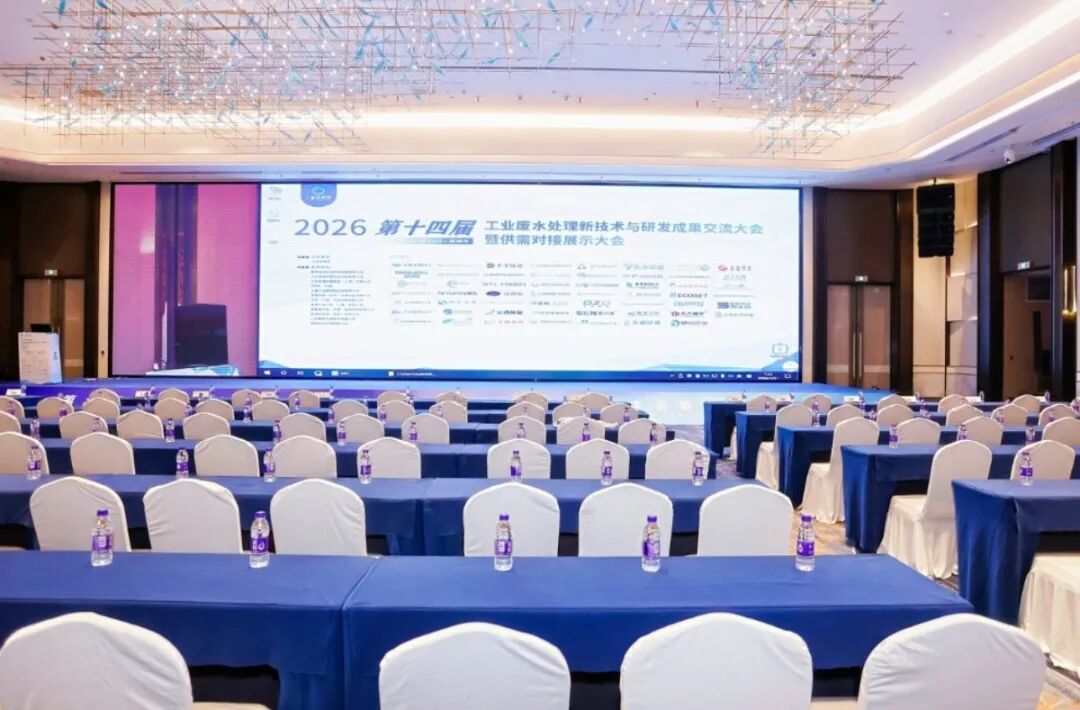
Grand Event Opens: Focusing on New Technologies, Jointly Discussing Industrial Upgrades
On March 22, in Hangzhou — the nation's first provincial capital to be designated an "ecological civilization pilot" — the "14th 2026 Industrial Wastewater Treatment New Technologies and R&D Achievements Exchange Conference & Supply-Demand Docking Exhibition," co-hosted by Industrial Environmental Protection Network, East China University of Science and Technology, and the National Engineering Research Center for Industrial Wastewater Harmlessness and Resource Recovery, was held as scheduled. The conference focused on core technologies, industrial upgrades, and supply-demand synergy in industrial wastewater treatment, aiming to build an efficient exchange and docking platform to promote the high-quality development of the industrial environmental protection industry.
Currently, the traditional industrial wastewater treatment model faces the dual demands of improving quality and efficiency while achieving green upgrades. The industry urgently needs to break through technological barriers, unblock supply-demand channels, and strengthen industry-university-research collaboration. With "new technologies and R&D achievements" at its core, this conference brought together authoritative experts, research scholars, and leading enterprises to conduct in-depth discussions on key issues across the entire industry chain. Sotec Technology, as one of the invited enterprises, presented an answer worthy of attention at this event.
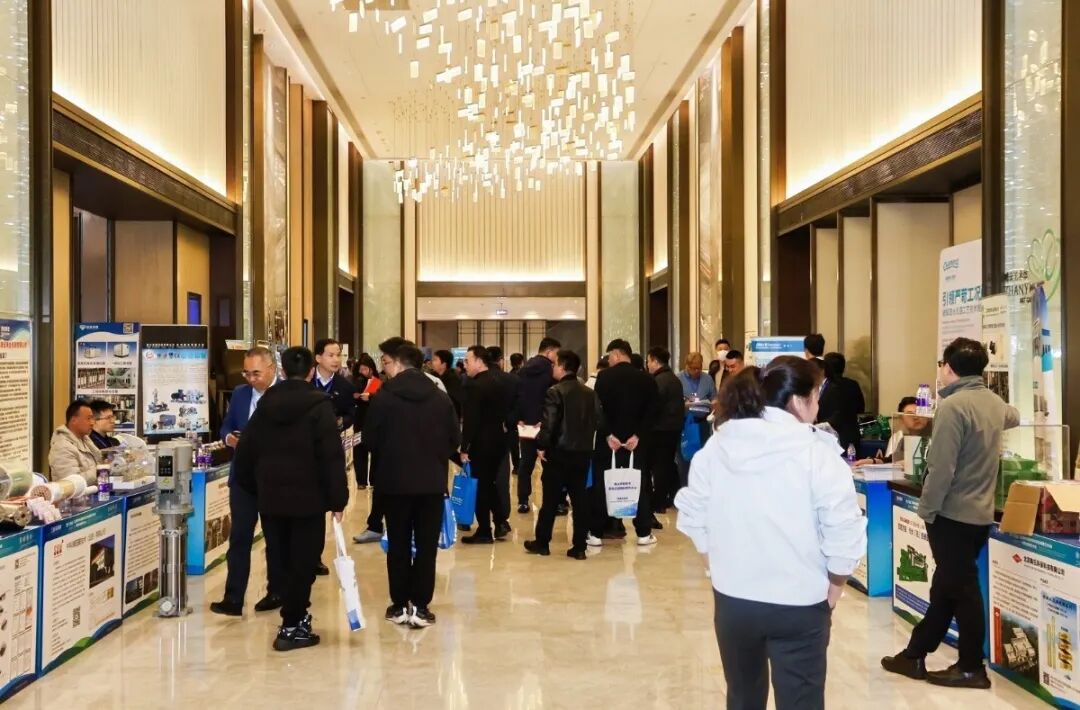
High-Salinity Wastewater Treatment: The "Ceiling" Faced by Traditional Models
In the field of industrial wastewater treatment, high-salinity complex wastewater has long been recognized as a "tough nut to crack." Represented by industries such as coal chemical, coking, refining, pharmaceuticals, electroplating, and landfill leachate, high-salinity wastewater poses treatment difficulties concentrated in the pretreatment stage. In the mainstream "zero liquid discharge" process route — "pretreatment + membrane concentration + evaporation crystallization" — the effectiveness of pretreatment directly determines the operating cost of the entire system and the quality of the final product. However, traditional pretreatment technologies frequently fail in high-salinity environments:
Fenton oxidation: Chloride ions quench free radicals, causing a sharp drop in efficiency.
Ozone oxidation: High salinity inhibits free radical generation, significantly reducing oxidation capability.
Poor pretreatment performance triggers a chain reaction: accelerated membrane fouling, poor-quality crystalline salts with high impurity content, and ultimately prohibitive disposal costs. This not only raises operational expenses for enterprises but also runs counter to the development directions of green, low-carbon, and resource recycling.
Sotec Technology's "Sword of Light"
To address this industry pain point, Sotec Technology showcased its independently developed Titanium-Electrode High-Salinity Water Oxidation Equipment at the conference. This is not a simple process improvement, but a technological breakthrough starting from the material foundation.
Core Breakthrough 1: Material Innovation — Endowing the Equipment with "Long-Life" Genes
The "heart" of the equipment — the anode material — is made of a titanium-containing composite anode material developed through the joint laboratory of Sotec Technology and Peking University. This material exhibits excellent resistance to acids, alkalis, and high-potential corrosion, with electrode service life far exceeding that of conventional products. This enables the equipment to operate stably over extended periods under extreme high-salinity, highly corrosive conditions, fundamentally addressing the traditional pain points of "short lifespan and frequent replacement."
Core Breakthrough 2: Structural Optimization — Providing "Optimal Channels" for Efficient Reactions
To accommodate the complex characteristics of different water qualities, Sotec Technology has developed various electrode configurations, including spiral-wound, flat-plate, and mesh types, along with specially designed reactor structures that significantly enhance mass transfer efficiency. This allows the equipment to achieve more thorough contaminant removal and more stable operation at the same energy consumption level.
The "Hardcore" Confidence Behind the Titanium-Electrode High-Salinity Water Oxidation Equipment
What can this equipment accomplish?
Simultaneous removal: COD, ammonia nitrogen, color, and colloids in one step, simplifying the process flow.
Broad applicability: Covering high-salinity scenarios such as coal chemical, coking, refining, pharmaceuticals, electroplating, and leachate.
Operational advantages: A purely physicochemical oxidation process that requires no chemical dosing, produces no excess sludge, and generates no secondary pollution, achieving intrinsic safety and green operation.
A Validated Answer: From the Laboratory to Benchmark Project Sites
The ultimate test of a technology lies in its application. What Sotec Technology brought to this conference was not just a product, but a proven solution validated by benchmark projects.
Benchmark case: Sinopec Yuanba Gas Field, with a daily treatment capacity of 1,200 m³/d, has been operating stably over the long term. This represents the highest endorsement of technological reliability from a major state-owned enterprise.
Intellectual property: 9 granted patents covering electrode materials and reactor structures, forming a solid technological moat.
Industry-university-research background: A high-quality transfer product from the Peking University joint laboratory, reflecting a complete chain from fundamental research to engineering application.

 All rights reserved Sichuan ICP No. 12019139 Sichuan Public Network Security No. 44030502001115


